



Roofing Dumpster Rental in Rossville, GA: Plan Debris Removal Before Tear-Off Day
The crew starts stripping shingles at seven in the morning. By nine, there's a mountain of old asphalt sitting on tarps in the front yard, and somebody is making a run to find a truck. That pile grows faster than anyone expects, and once it's on the ground, moving it twice costs real labor hours.
Roof replacements in Rossville, GA go smoother when the debris plan is settled before the first shingle comes off. That means the right size container, staged in the right spot, delivered on the right day. It's not complicated, but it does have to happen in advance — deciding at 9 a.m. on tear-off day is already too late.
This article walks through how roofing debris differs from other job waste, how to size a container for your roof, where to stage it, and when to schedule delivery.
Why Roofing Debris Behaves Differently Than Other Job Site Waste
Most construction debris is bulky and relatively light. Drywall scrap, framing offcuts, packaging, and trim fill volume quickly but don't weigh much per cubic yard.
Shingles are the opposite. Asphalt shingles are dense, and a stack of them takes up far less room than it weighs. A container that looks half empty can already be carrying serious weight. That flips the usual planning logic. On most jobs you run out of space first. On a roofing job you can run out of weight allowance first.
Two practical consequences follow:
- Don't judge fullness by eye. A roofing container that looks like it has room may not.
- Talk about weight up front. Weight allowances vary by container and project. Confirm what applies to your rental before the crew starts loading, not after.
Old shingles also come off in awkward, nail-studded chunks. Loading them by hand from tarps takes longer than loading them straight off the roof or off a slide. Container placement affects labor cost directly on this kind of job.
Sizing a Dumpster for a Rossville Roof Replacement
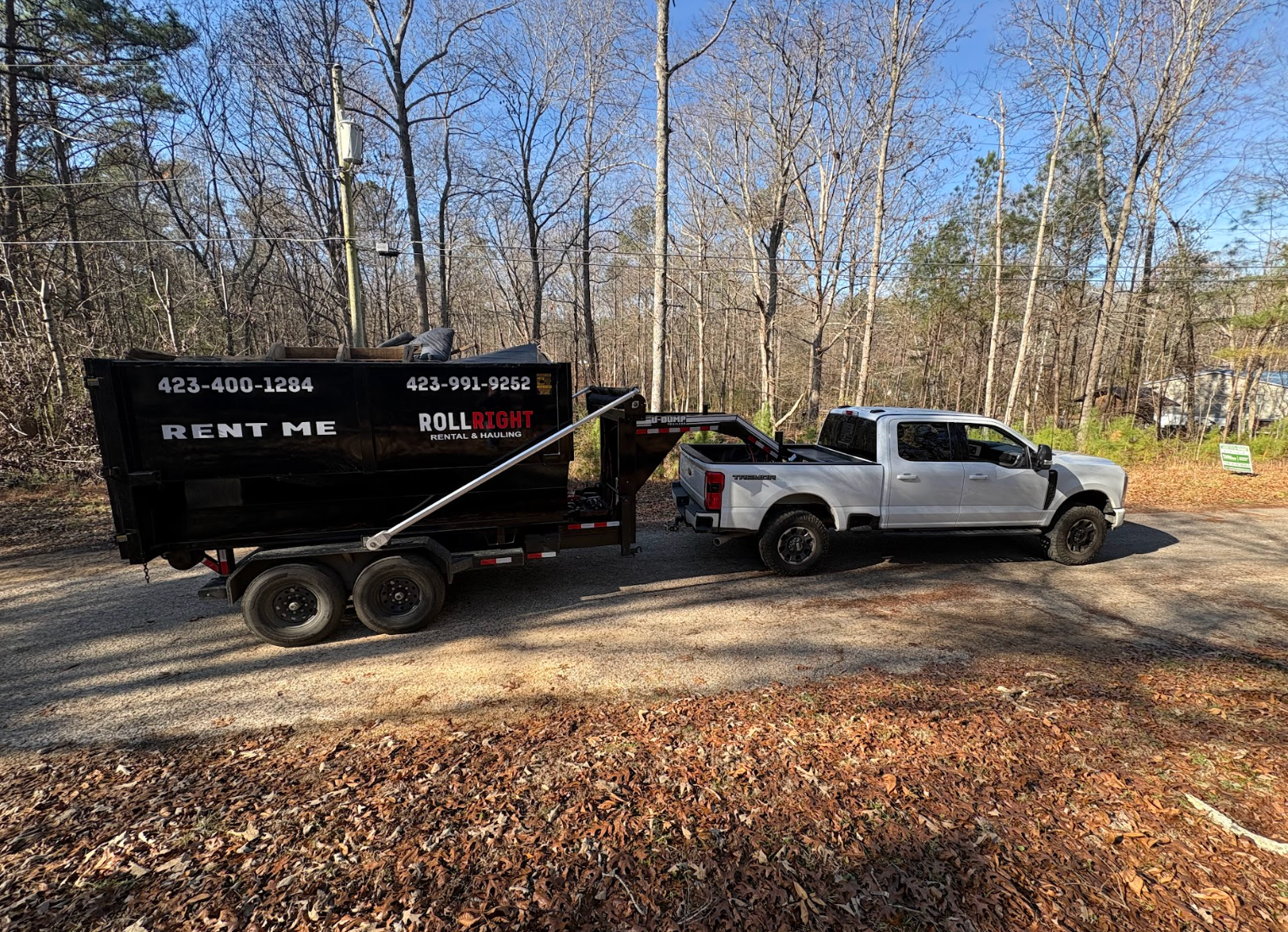
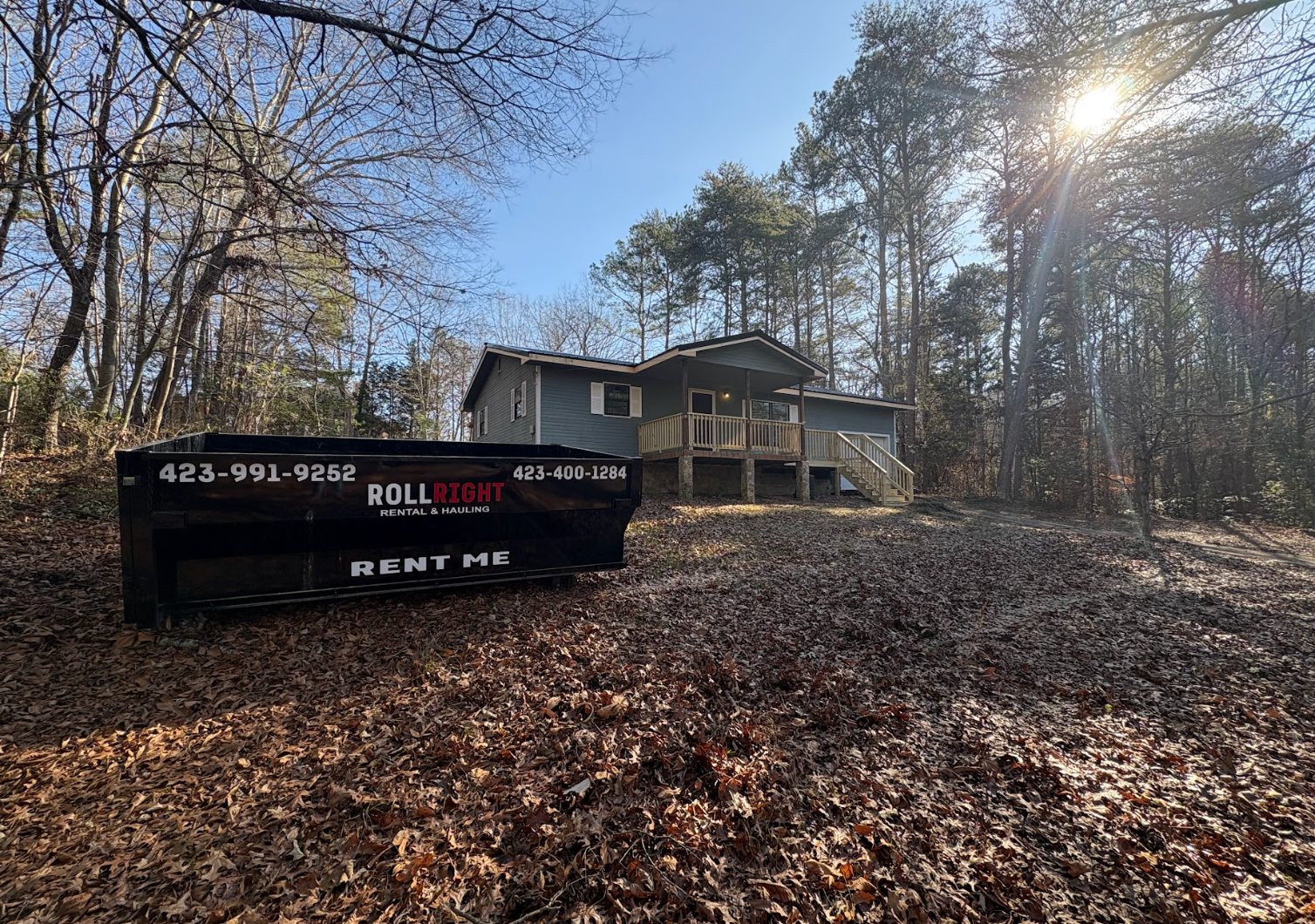
RollRight's 12-yard and 16-yard roll-off dumpsters both work for roofing jobs. Picking between them starts with the size of the roof.
Think in squares, not square feet
Roofers measure in squares — one square equals 100 square feet of roof surface. A typical single-story ranch in Walker County might run 15 to 25 squares. A larger two-story home with multiple gables can push well past that.
Estimating your square count first makes the container conversation much faster. If you're a homeowner and don't know the number, your roofer will.
Layers change everything
This is the single biggest sizing variable and the one people forget. If the crew is tearing off two layers of old shingles, you have roughly double the debris of a single-layer tear-off on the same roof. Three layers, more still.
Before you call about a container, find out how many layers are coming off. A roofer can usually tell from a quick inspection at the eave or a vent penetration.
When to size up
Consider the larger container when:
- The tear-off is more than one layer
- The roof includes decking replacement, which adds bulky plywood on top of the shingles
- You're also removing old flashing, vents, gutters, or fascia
- The job spans multiple days and you'd rather not schedule a swap mid-project
Consider the smaller container when the roof is modest, the tear-off is single-layer, and driveway space is genuinely tight.
If you're between the two, describe the roof over the phone. Squares, layers, and whether decking is coming off are the three details that settle it.
Where to Put the Dumpster on a Roofing Job
Placement matters more on roofing than on almost any other job type, because debris is coming down from height.
Close to the tear-off side
Ideally the container sits near the section being stripped, so shingles go from roof to container in one motion. Every extra foot between the drop zone and the container is a foot the crew has to carry material by hand, multiplied by a few tons.
If the roof has multiple faces, position for the largest section or plan around a mid-job repositioning.
Clear of overhead obstructions
The delivery truck needs vertical clearance to set the container and to lift it at pickup. Low limbs, power service drops, carport overhangs, and porch roofs all rule out otherwise convenient spots. Walk the placement area and look up, not just down.
Protecting the driveway
Roll-off containers are heavy, and roofing loads make them heavier. On asphalt driveways especially — and on hot Northwest Georgia afternoons — placing plywood or planking under the container's contact points is a reasonable precaution. Confirm placement requirements when you schedule, since site access varies from property to property.
Also plan for nails. Tear-offs scatter them across the yard and driveway regardless of how careful the crew is. A magnet sweep at the end of the job is standard practice and worth building into the schedule.
Timing Delivery Around Tear-Off Day
The container should be on site before the crew climbs the ladder. Not the same morning. The day before, if scheduling allows.
Here's the sequence that works:
- Confirm the tear-off date with your roofer.
- Book the container for delivery the day prior, or early enough that morning that it's set before work begins.
- Clear the placement area — move vehicles, trailers, trash cans, and anything with wheels.
- Tear off and load directly into the container.
- Schedule pickup once the roof is dried in and the debris is loaded.
Weather is the wild card in September and October. Northwest Georgia gets rain that pushes roofing schedules by a day or two, and a tear-off that started can't just pause. Let the rental company know if your date is weather-dependent so pickup can flex with the job.
Roofing work carries real fall and material-handling risks. OSHA publishes job site safety standards for residential construction</a> that crews should be following, and container placement should never conflict with the crew's fall-protection setup or ladder positioning.
What Walker County Roofers Should Confirm Before Loading
A short list worth running through before the first bundle comes off:
- What materials are accepted. Shingles, underlayment, and decking are typical roofing debris. Confirm acceptable and prohibited materials before loading — some items require separate handling, and Georgia EPD guidance on construction and demolition debris is a useful reference for what falls into that category.
- Weight considerations. Ask what applies to your container and project before you fill it.
- The fill line. Debris shouldn't be loaded above the top rail. An overloaded container can't be safely tarped or transported, which delays pickup.
- Access for the return trip. The same clearance the truck needed on delivery is needed on pickup. Don't park a work van behind it on the last day.
- Who's on site at delivery. Someone who can point to the exact placement spot saves a phone call and a repositioning.
Working with a local company helps here. RollRight serves Rossville and communities across Walker County, so the driver knows the area and the scheduling conversation stays direct.
Frequently Asked Questions
Does RollRight offer roofing dumpster rentals in Rossville, GA?
Yes. RollRight Rental & Hauling delivers roll-off dumpsters throughout Rossville and Walker County for roofing, renovation, and cleanup projects. Call (423) 991-9252 to check availability for your tear-off date.
What size dumpster do I need for a roof replacement?
It depends on your roof's square count, how many layers are being removed, and whether decking is being replaced. RollRight offers 12-yard and 16-yard roll-off dumpsters. Describe the roof when you call and RollRight can help you match the container to the job.
Can I put shingles in a regular dumpster?
Roofing debris is commonly handled in standard roll-off containers, but weight matters more with shingles than with most other debris. Confirm what applies to your rental before loading.
Where should the dumpster go for a roofing job?
As close as safely possible to the section being torn off, on a firm surface, clear of overhead limbs and power lines. Placement requirements depend on site access, so discuss your driveway and yard layout when you schedule.
Will the dumpster damage my driveway?
Loaded containers are heavy. Placing plywood or planking under the contact points is a common precaution, particularly on asphalt. Confirm placement details when you book.
When should the dumpster be delivered?
Before tear-off begins — ideally the day before. Debris accumulates fast once the crew starts, and handling it twice costs labor hours.
How long can I keep the dumpster?
Rental periods depend on the equipment and the project. Contact RollRight to confirm current rental details and to arrange pickup timing that fits your schedule.
Schedule Your Container Before the Crew Arrives
A roof replacement moves fast once it starts. The debris plan is the piece that determines whether it moves smoothly or whether half the crew spends the morning hauling shingles across the yard.
Planning a roof replacement in Rossville, GA? Call RollRight Rental & Hauling at (423) 991-9252 to schedule roll-off dumpster delivery before tear-off day. Have your square count, layer count, and tear-off date ready and the booking takes about five minutes. You can also request a dumpster delivery through the contact form.